Built in vs Moveable outdoor seating; which works better?
 Ducon Outdoor Living
Choosing between built-in and moveable outdoor seating is one of the most important decisions when planning an outdoor space. The right choice affects comfort, cost, durability, maintenance, and how you use the space long-term.
In this guide, you’ll get a clear, unbiased comparison of built-in vs moveable outdoor seating, including costs, pros and cons, climate suitability, and real-world use cases, so you can make the right decision for your needs.
Built-in outdoor seating is best for permanent, high-use spaces where durability, design consistency, and long-term value matter.
Moveable outdoor seating is better if flexibility, lower upfront cost, and the ability to rearrange or store furniture are priorities.
If you’re planning a custom outdoor seating area, working with professionals who understand layout, materials, and climate conditions can make a significant difference in long-term performance and comfort.
What Is Built-in Outdoor Seating?
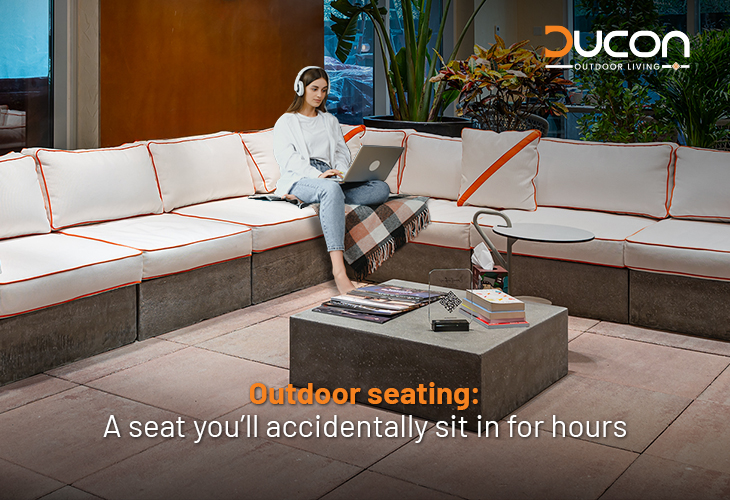
Built-in outdoor seating refers to permanently constructed seating that becomes part of the outdoor structure itself.
Common examples include:
- Masonry or concrete benches
- Integrated seating around fire pits
- Fixed seating combined with planters or retaining walls
- Custom seating under pergolas or shaded structures
Built-in seating is typically designed and installed as part of a broader outdoor layout rather than added later.
Key characteristics:
- Fixed position
- Custom dimensions
- Designed to match the surrounding architecture
Built using weather-resistant materials
What Is Moveable Outdoor Seating?
Moveable outdoor seating includes freestanding furniture that can be repositioned, removed, or stored when not in use.
Common examples include
- Outdoor sofas and chairs
- Modular seating sets
- Stackable or foldable furniture
- Lounge chairs and benches
This type of seating is popular for its adaptability and ease of replacement.
Key characteristics:
- Flexible layout
- No installation required
- Easier to update or replace
Wide range of styles and materials
Built-in vs Moveable Outdoor Seating: Side-by-Side Comparison
Feature | Built-in Seating | Moveable Seating |
Installation | Permanent construction | No installation |
Flexibility | Fixed layout | Highly flexible |
Durability | Very high | Medium to high (material-dependent) |
Maintenance | Low | Moderate |
Weather resistance | Excellent | Varies by material |
Design integration | Seamless | Modular |
Lifespan | 15–30 years | 5–10 years |
Upfront cost | Medium | Lower |
Cost Comparison: What to Expect
Built-in Outdoor Seating Costs
Built-in seating generally has a higher upfront cost due to materials, labor, and design work.
Typical cost factors:
- Construction materials (concrete, stone, wood, aluminum)
- Custom design and measurements
- Installation labor
However, built-in seating often has lower long-term replacement costs because of its durability.
Moveable Outdoor Seating Costs
Moveable seating usually costs less initially but may require replacement over time.
Cost factors include:
- Furniture material quality
- Cushion durability
- Exposure to weather
- Storage requirements
Lower upfront cost doesn’t always mean lower lifetime cost.
Climate & Weather Considerations (Often Overlooked)
Climate plays a major role in determining which seating option performs better over time.
Built-in Seating in Hot or Harsh Climates
- Resists UV exposure better
- Less risk of wind damage
- Doesn’t require seasonal storage
- Better suited for high-heat and dusty environments
Moveable Seating in Harsh Conditions
- Cushions can fade or degrade
- Lightweight furniture may need securing
- Requires covered storage for longevity
For regions with intense sun, heat, or wind, professionally designed outdoor seating solutions can help avoid common durability issues.
Maintenance & Longevity
Built-in Seating
- Minimal ongoing maintenance
- Occasional cleaning
- Rare structural repairs
- Long service life
Moveable Seating
- Regular cleaning required
- Cushions may need replacement
- Frames may loosen or corrode
Shorter usable lifespan
Flexibility vs Permanence: A Key Trade-Off
This decision often comes down to how permanent you want your outdoor layout to be.
Choose Built-in Seating If:
- You want a defined, structured space
- The seating layout won’t change often
- You prefer a clean, architectural look
- The area is used frequently
Choose Moveable Seating If:
- You like rearranging layouts
- The space serves multiple purposes
- Seasonal changes affect usage
- You want easy upgrades
Space Planning & Design Impact
Built-in seating:
- Maximizes space efficiency
- Creates visual flow
- Defines zones clearly
Moveable seating:
- Allows experimentation
- Adapts to events or gatherings
- Requires storage planning
For larger or custom outdoor areas, professional outdoor seating design ensures comfort, circulation, and long-term usability.
Built-in vs Moveable Seating: Pros & Cons
Built-in Seating Pros
- Extremely durable
- Custom-designed
- Enhances overall outdoor design
- Lower long-term maintenance
Built-in Seating Cons
- Higher upfront cost
- Fixed layout
- Requires professional installation
Moveable Seating Pros
- Lower initial investment
- Flexible arrangement
- Easy to replace or update
- No construction required
Moveable Seating Cons
- Shorter lifespan
- Requires storage
- Can feel less cohesive
More maintenance over time
Which One Is Better for Your Outdoor Space?
There is no universal winner, only the right choice for your situation.
- Permanent, high-use outdoor areas often benefit from built-in seating
- Flexible, seasonal, or evolving spaces often suit moveable seating
- Many homeowners use a hybrid approach: built-in seating as a base, complemented by moveable furniture
If you’re planning a long-term outdoor project, consulting outdoor seating specialists can help you avoid costly design mistakes.
Frequently Asked Questions
Is built-in outdoor seating worth the cost?
For permanent outdoor spaces used regularly, built-in seating often provides better long-term value due to durability and low maintenance.
Can movable seating work in hot climates?
Yes, but material choice and proper storage are essential to prevent wear and fading.
Can both seating types be used together?
Absolutely. Combining built-in seating with moveable furniture offers structure and flexibility.
Which option requires less maintenance?
Built-in seating generally requires less ongoing maintenance than moveable furniture.
Choosing between built-in vs moveable outdoor seating is about balancing flexibility, durability, cost, and long-term use.
Understanding how each option performs in real-world conditions helps you design an outdoor space that stays comfortable, functional, and visually appealing for years to come.
For those planning a custom outdoor project, exploring bespoke outdoor seating areas designed specifically for your space and environment can simplify the decision and improve long-term results.