Paver FAQ: The Guide to a Flawless Patio or Driveway
You’re here because you’re thinking about pavers.
Maybe you’ve seen a stunning herringbone patio and thought, “I want that.”
Or maybe you’re tired of your cracked driveway.
But you have questions. A lot of them.
And if you’re going to invest in a paver project, you need answers that aren’t fake. You need the why behind the what.
And the good news is you’ve found them here.
What exactly is a paver?
Forget the complex definitions.
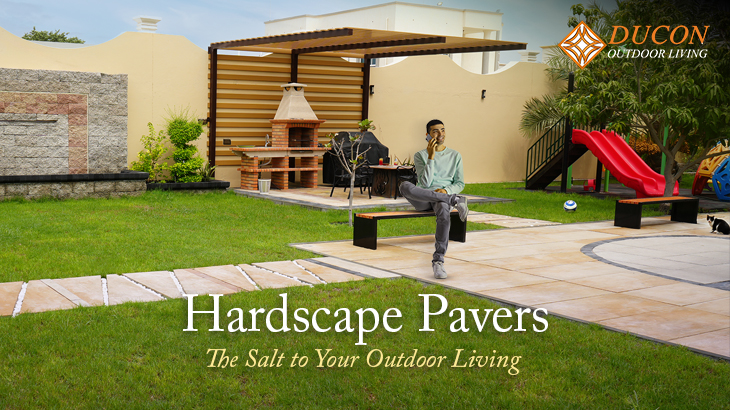
A paver is a manufactured or natural stone unit, typically rectangular or irregular in shape, used to create hard outdoor surfaces like patios, driveways, pathways, and pool decks.
Think of it like this: If you were to build a wall, you would use bricks. If you were to build a floor for your outdoors, you would use pavers from Ducon Outdoor Living
The most important concept to understand is that a paver is not just a decorative piece, it is a part of a highly effective interlocking system.
This is the secret to their durability. It’s also why the following questions are so important.
- Why is a Professionally Engineered Base Non-Negotiable in Our Projects?
Skipping the base is the single biggest reason paver projects fail. It’s like building a house on sand.
Here’s the data-backed reason why a base is non-negotiable:
- Prevents Sinking: A compacted base of crushed aggregate distributes weight evenly. Without it, point loads like a car tire will push pavers straight down into the soft soil. The result? A wavy, sunken mess.
- Manages Water: A proper base acts as a drainage layer. In cold climates, water under your pavers will expand, and pull your surface upward. A base prevents this by letting water drain away.
- Creates a Perfect Level: You can’t lay a flat patio on lumpy dirt. The base provides a flawless, compacted surface for your bedding sand.
When is it installed?
Immediately after excavation and before any other part of the paver system.
The paver base isn’t an optional step. It’s the foundation of everything. If you remember one thing from this guide, let it be this.
- When do we set up paver edging (The “Lock” for Your Pavers)
First, a quick clarification
Paver Edging: Paver edging is the frame you put around the puzzle.
Paver Restraints: Paver restraints are the hidden anchors that lock your entire patio or walkway in place.
So, when do you install them?
The perfect moment is after you lay all the pavers but before you add the final joint sand.
- Which Paver Pattern is Best?
Running Bond: Simple, classic, efficient.
Good for patios and walkways.
The “best” pattern balances strength and support with visual appeal. But if we had to pick a champion based on pure performance, the winner is clear.
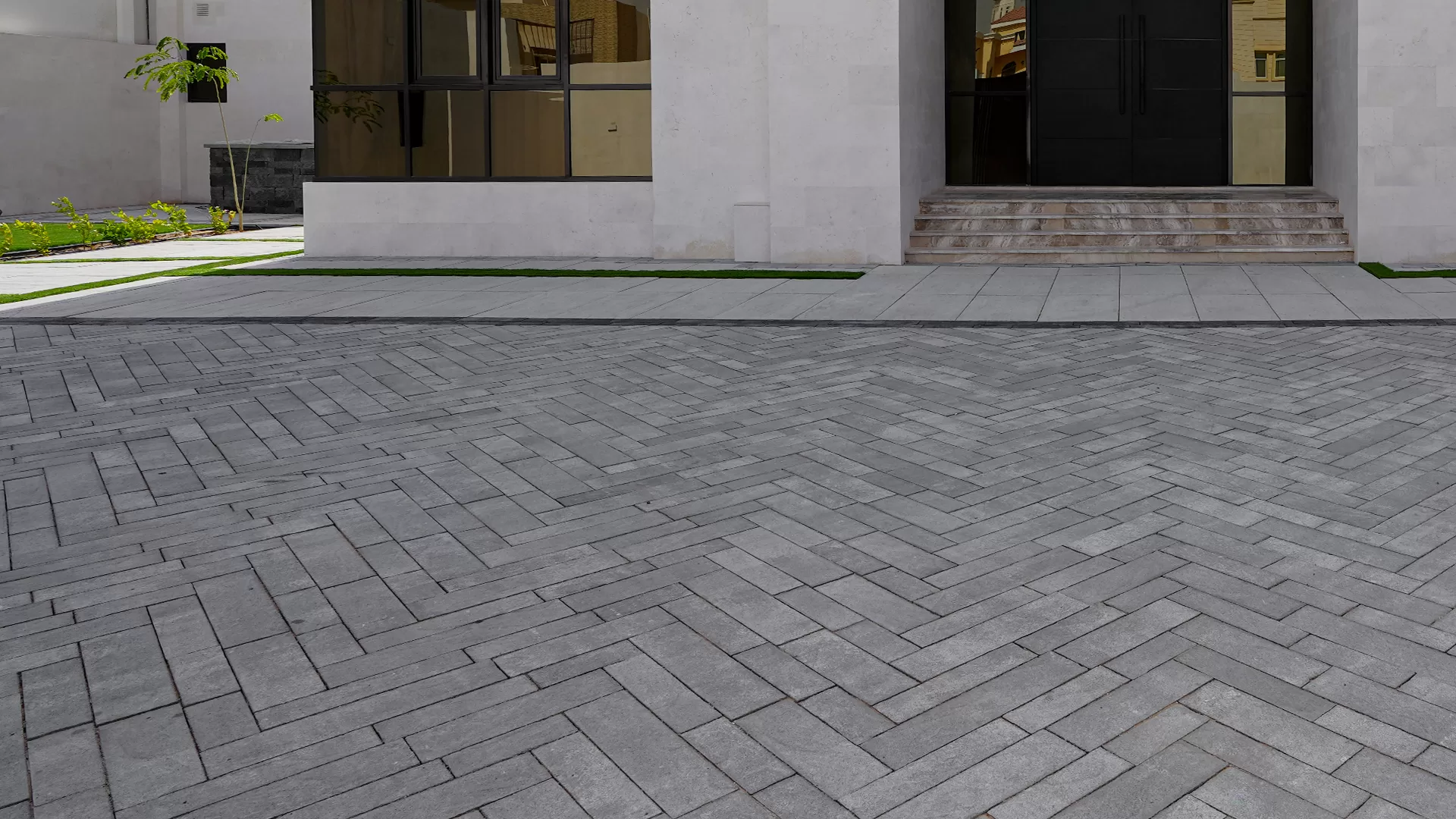
Herringbone (45° or 90°): The undisputed champion for load-bearing applications like driveways. The interlocking angles provide maximum resistance to lateral movement.
Basket Weave: Attractive and traditional, but the least stable pattern. Not recommended for areas that will bear heavy loads.
For driveways or any surface that will handle vehicles, the herringbone pattern is objectively the best. For pedestrian-only areas, running bond offers a great balance of strength and simplicity.
5: How does Ducon protect pavers from stains and fading?
At Ducon, we have maintenance packages to ensure pavers maintain their aesthetic appeal and structural integrity for years.
Advanced Cleaning and Stain Removal
Before any protection is applied, surfaces must be clean. Our process begins with specialized cleaning agents:
- Hardscape Shampoo for general dirt and grime.
- Hardscape sanitizer to eliminate organic growth like algae and mildew.
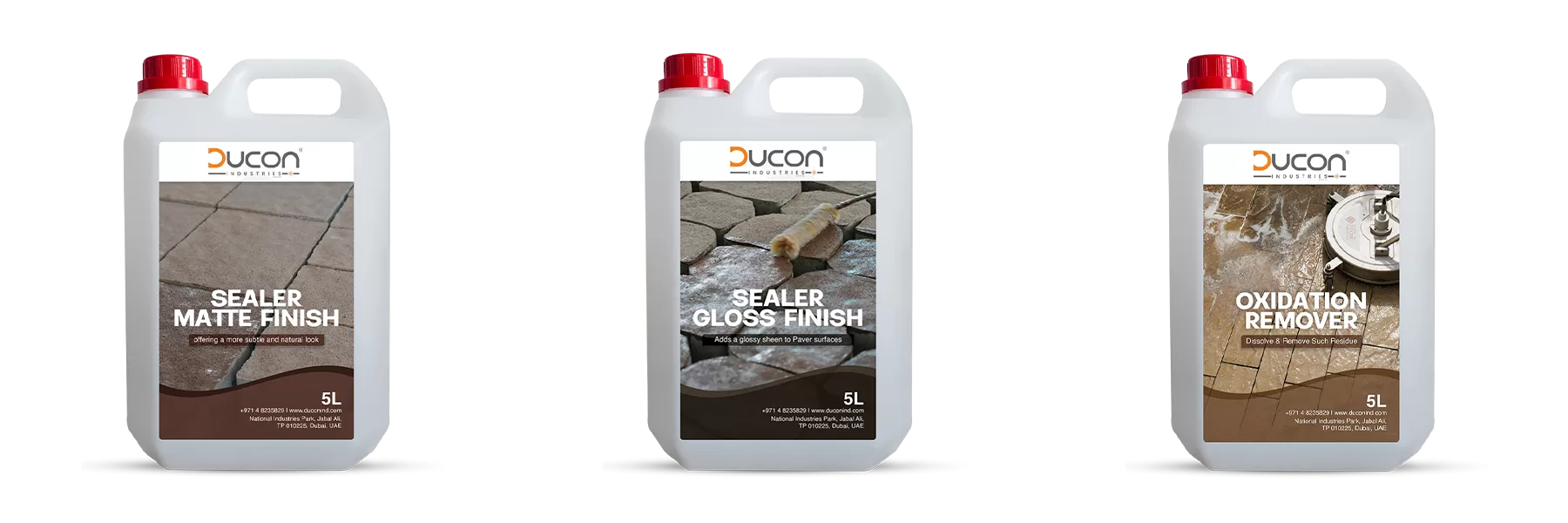
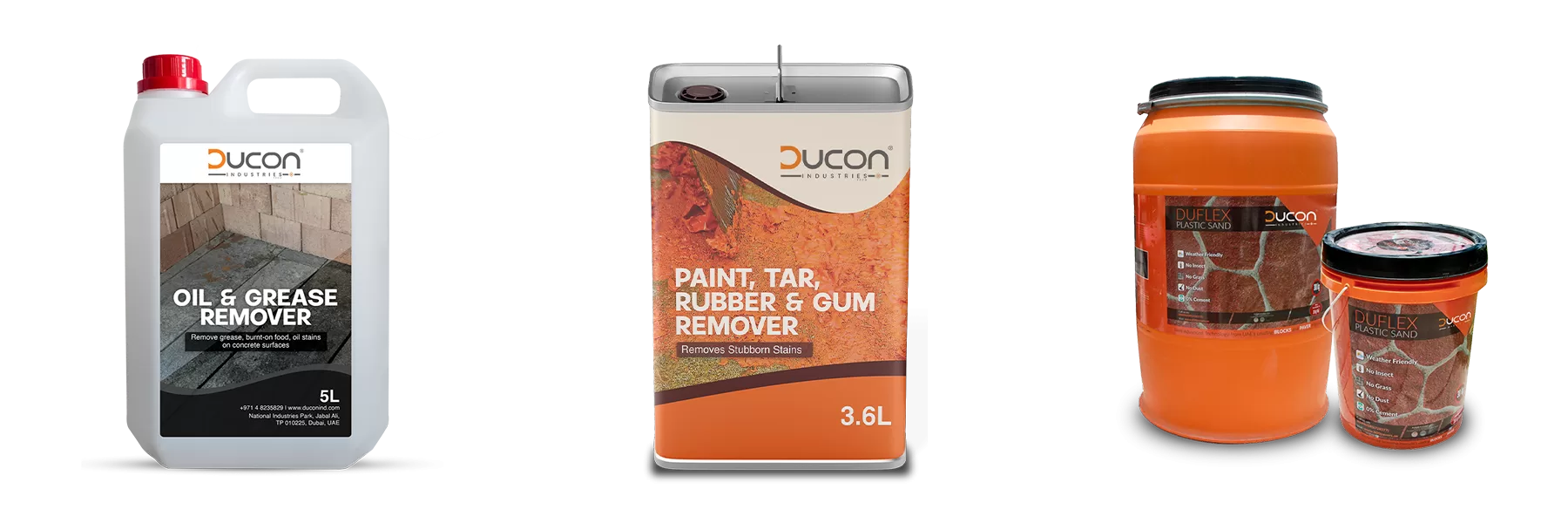
- Targeted stain removers for specific challenges, including oil & grease remover, paint remover, and oxidation remover for rust.
Professional-Grade Sealing
The core of our protection strategy is the application of our advanced sealers. We have two finishes to suit the project’s design intent:
- Matte Finish Sealer: Provides a natural look with maximum UV and stain resistance.
- Gloss Finish Sealer: Enhances color vibrancy with a rich, wet-look shine.
These sealers are engineered with high UV inhibitors to prevent color fading and create a powerful barrier against oil, chemical stains, and weather erosion.
This systematic approach ensures our pavers are not only beautiful upon installation but are also equipped to withstand the region’s harsh climate.
6: What’s the best way to lock paver joints permanently?
This is a common issue. We use duflex/polymeric Sand as permanent solution.
Unlike regular sand, Duflex contains special binders. When activated with water, it hardens into a flexible, durable joint that locks pavers together, prevents weed growth, and stops erosion from rain or cleaning. For simpler projects or narrower joints, Ducon Silica Sand is a cost-effective option.
7: How does Ducon protect my pavers from the harsh sun and prevent fading?
This is the final, critical step.
A quality sealer acts as sunscreen for your pavers.
Ducon offers two finishes to match your aesthetic preference:
Ducon Sealer (Matte Finish): Provides maximum protection against UV rays, oil, and stains while preserving the paver’s natural, original appearance. This is our most popular choice for a low-maintenance, “like-new” look.
Ducon Sealer (Gloss Finish): Offers the same strong protection while enhancing the pavers’ colors with a rich, wet-look shine. Ideal for creating a dramatic, high-end effect.
The Ducon Advantage: Our sealers are formulated with UV inhibitors specifically for the Gulf climate, ensuring your pavers stay vibrant for years, not just months.
By choosing the complete Ducon system from the base and pavers to the jointing sand and protective sealers, you guarantee a result that is not only beautiful on day one but remains that way for the long term.
Contact Ducon Outdoor Living for more ideas on how to make your outdoor kitchen more meaningful and beautiful.